Haemonchus contortus (Barber’s Pole Worm)
Haemonchus contortus is a blood-feeding stomach roundworm, also known as the barber’s pole worm. The name “barber pole worm” comes from its twisted red and white appearance.
Key facts
Why it matters?
Roundworms are common in all grazing sheep flocks. Although adult sheep tend to be less susceptible to roundworms, infections in naive lambs can be associated with production losses. Roundworms can negatively impact on the absorption of nutrients required for growth.
One of the mixture of roundworms found in the UK is Haemonchus contortus which is a blood-feeding stomach roundworm, also known as the barber’s pole worm. The name “barber pole worm” comes from its twisted red and white appearance that can be seen in the stomach of animals at post-mortem.
All roundworms cause damage to the tissues they live in, and this can lead to a reduction in the animal’s ability to digest and absorb nutrients. Haemonchus contortus is a blood feeding parasite with a huge appetite, this parasite can consume so much blood from the host that they become anaemic.
Quick Facts
- Females produce up to 15,000 eggs per day! Other worms only produce ~400!!
- The short lifecycle (20 days) and huge egg output means a rapid build-up of parasites on pasture can occur.
- <7000 worms can drink a can of fizzy juice worth of blood per day!
Clinical Signs
Pale mucous membranes
Gums and eyelids are pale indicating anaemia
Bottle jaw
Swelling under the jaw
Lethargy
Infected animals may also have reduced grazing activity
Weight-loss
Poor body condition
Death
In severe cases animals may collapse or die suddenly
What are the risk factors for Haemonchosis?
Haemonchus eggs develop at >9°C
At 15°C this decreases to about 2 weeks and in warmer temperatures (>15°C) eggs can develop within a week.
Animals in poor condition
Animals in poor condition are more susceptible to disease, especially those that have not had previous exposure.
Pregnant or lactating ewes
When ewes are under stress they are unable to maintain immunity, at this time (from 2 – 4 weeks prior to lambing until 6 – 8 weeks after) the egg output from infected ewes can be higher than normal.
Other ruminants
Cattle, goats and deer can become infected with H. contortus and may impact on the transmission and likelihood of disease in sheep.
Diagnosis
What farmers might notice
Ill-thrift with pale mucous membranes and bottle jaw (like liver fluke infection) with the absence of diarrhoea.
FAMCHA Scoring
A practical on-farm tool that can be used to score the colour of the lower eyelid to assess anaemia. This test only diagnoses anaemia which could be caused by something other than Haemonchosis.
Faecal Egg Count
FEC can give an indication of the parasite burden in the flock, however, the eggs of H. contortus are indistinguishable from other common roundworms. A special stain can be used to identify H. contortus eggs and is available through some diagnostic facilities.
Post-mortem
If animals have died or been euthanased a PM can confirm the presence of large numbers of adult worms in the stomach (abomasum). Speak to your vet.
Prevention and Control
Grazing Management
Cold weather significantly reduces H. contortus egg/larvae in pasture which will help prevent outbreaks. Moving stock from heavily contaminated pastures will minimise transmission.
Nutritional Support
Provide adequate nutrition to maintain good body condition. Regular body condition scoring (BCS) and forage assessment can inform decisions on flock nutrition.
Anthelmintic Treatment
Management of roundworms is normally by using wormers, at present there are five classes of anthelmintic registered for use in sheep. Ensure you check that the wormer you are using is suitable following proper diagnosis and advice from your vet or SQP.
Monitoring
Regular FEC (Faecal Egg Counts) and assessment of individual performance (i.e. weight gain or BCS) can inform targeted treatment decisions and FAMCHA scoring can identify at-risk animals.
Quarantine Treatment
This is crucial for ALL roundworms as it provides the opportunity to prevent anthelmintic resistant worms being brought onto your farm. Drenching new/returning stock and conducting a FEC two weeks later to check if it worked can help minimise this.
Vaccination
Barbervax (which was developed at Moredun) is used successfully in Australia and in South Africa (Wirevax) to control H. contortus where anthelmintic resistance is widespread. In the UK it is available under a special import certificate and can only be imported via veterinary prescription.
Integration is Key
To effectively use the vaccine it must be integrated into a parasite control plan, using an anthelmintic which is effective against H. contortus. The anthelmintic is used (strategically) to reduce worm burden with the vaccine used to prevent numbers building thereafter.
H. contortus ONLY
The vaccine only protects against H. contortus so it is important to control other roundworms using anthelmintic treatments and management strategies.
Multiple Boosters
Multiple vaccinations are needed every year. Animals are primed after three doses (administered before the main risk period) then six-weekly boosters are needed throughout the risk period.
Immunity is not sterile
Some infection and shedding of eggs will still occur.
Downloads & links
Related Resources
Download
Parasitology Flyer
DownloadKey resource
Factsheets
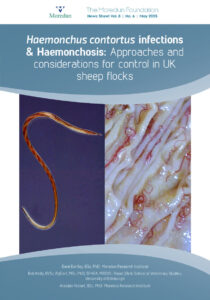
Haemonchus contortus infections & Haemonchosis May 2025
Published 31/05/2025Who's involved
Our Experts



Frequently asked questions
FAQ
Unlike some other roundworm species reports of anthelmintic resistant H. contortus are rare in the UK but we need to be vigilant as there are some cases of single- and multi-class resistance as well as total treatment failure. To slow the development of resistance:
-Administer effectively, check drenching gun, weigh animals, dose correctly
-Quarantine and treat all incoming sheep (including your own returning from grazing elsewhere)
-Check treatments have worked by performing post-treatment faecal egg count reduction tests
-Don’t rely solely on anthelmintics, use management strategies to reduce pasture contamination
